Panel wiring
Talking about how I wired my panels in school, what I tried, my thinking behind it, and what I learned.
In the programming world I would often say, "I'm doing things this way so the dumbass that comes next will know exactly what's going on and how to fix or change it. And that dumbass will probably be me." Turns out panels are a lot like that. The most important part across the two teachers I've had and the multiple YouTube videos I've watched is planning for the future.
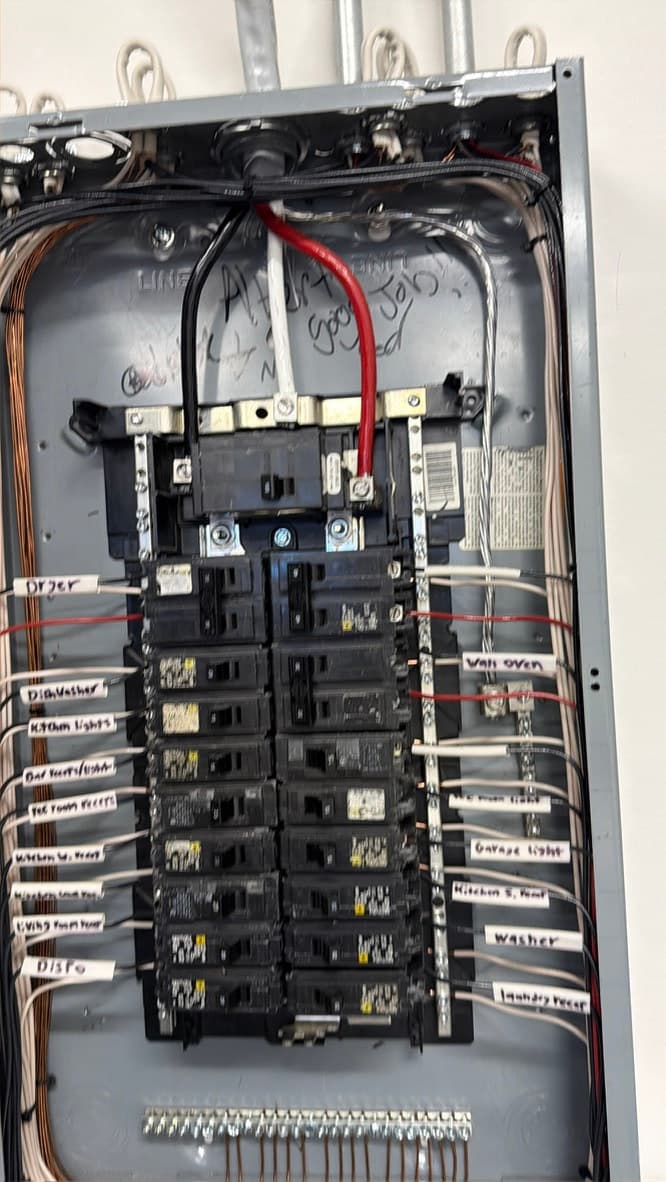
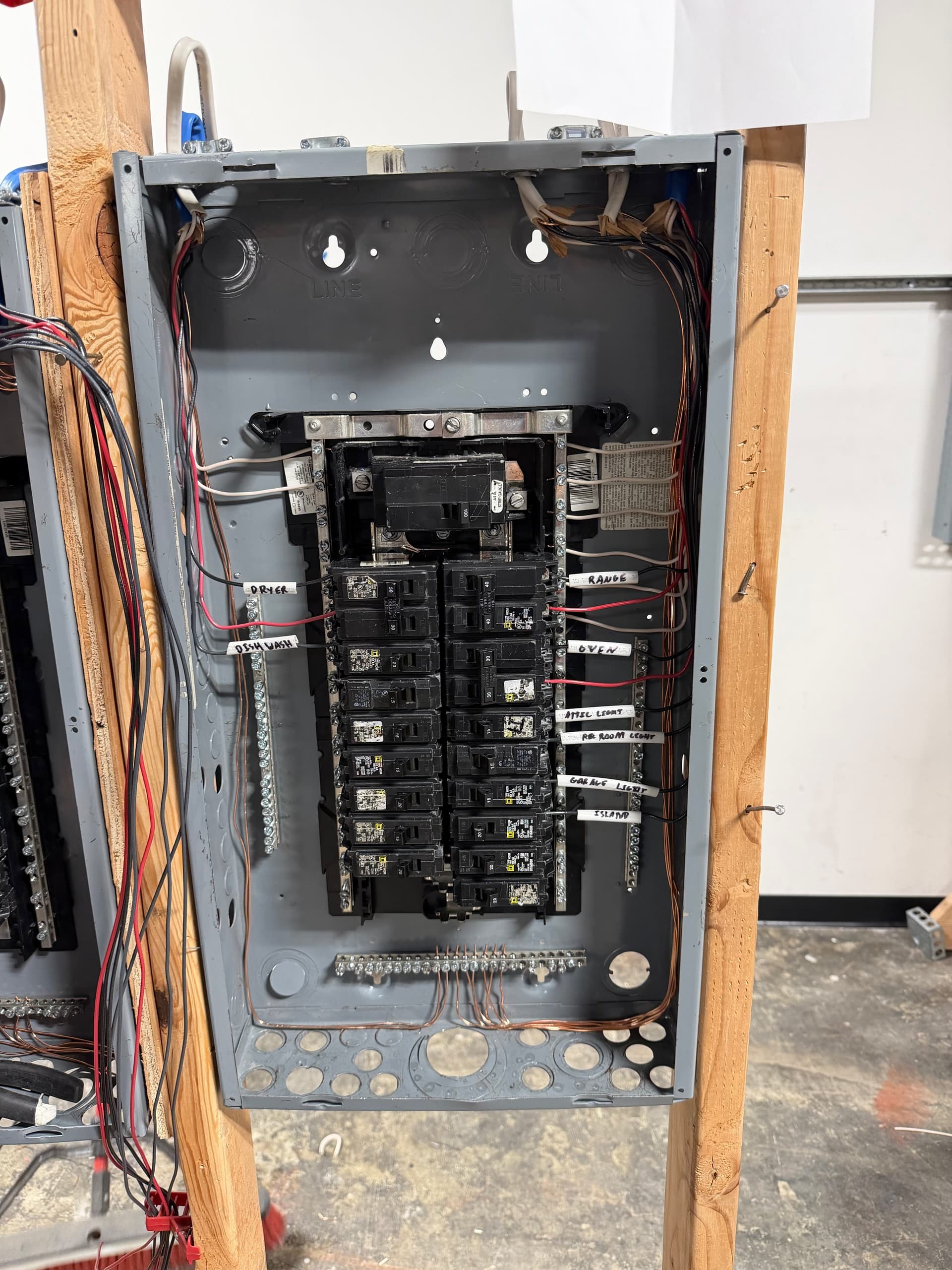
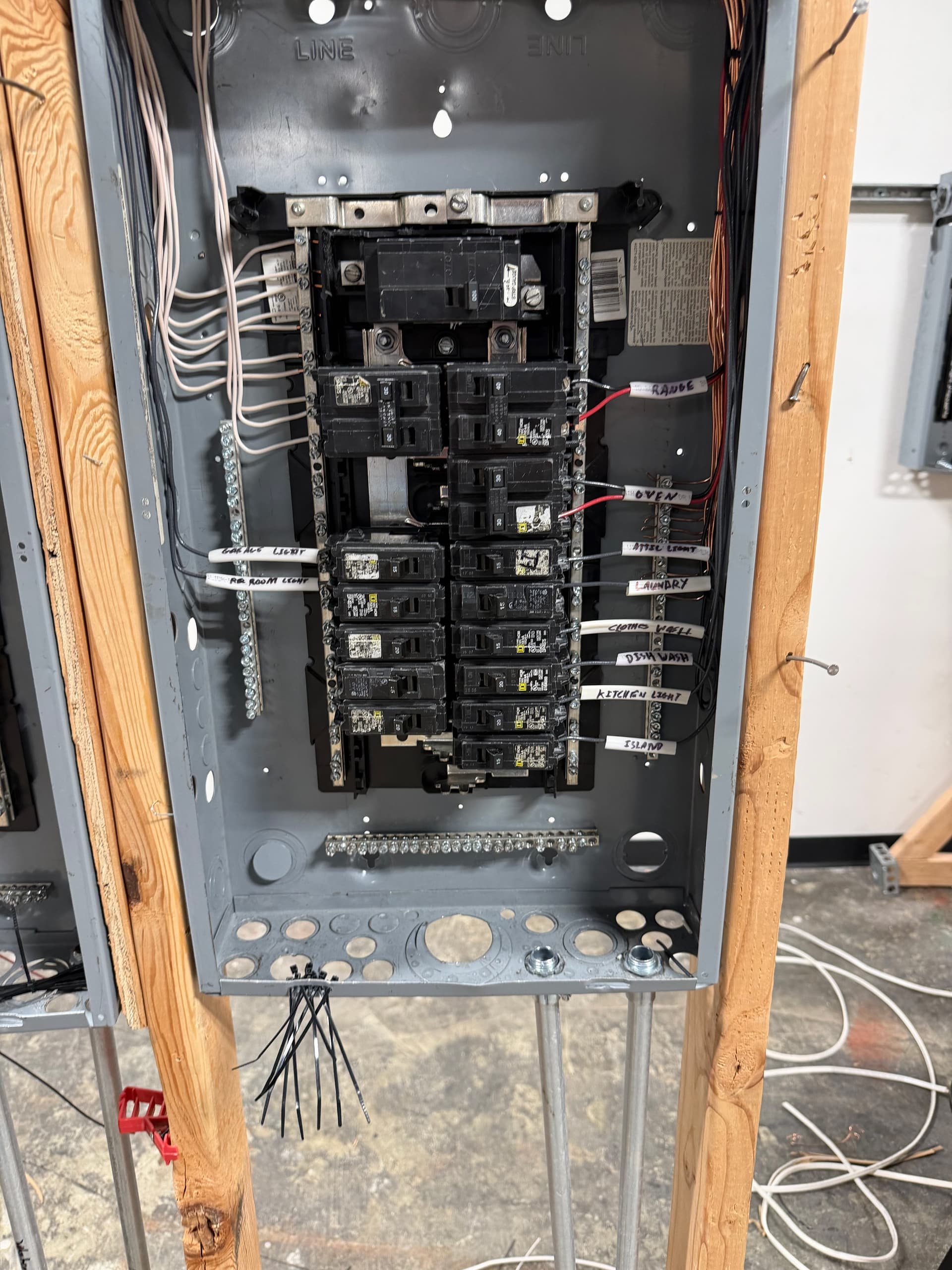
That's the first two panels I've ever wired. The emphasis was on tucking the grounds and neutrals towards the back, and labelling the hot's with what circuit they belong to. The original plan was for us to work on 8, 10, 12, 14, and then 16 circuits over the 5 weeks - the 16 circuits being the final. However, after the second week we got a new teacher, Ryan, who had a different way of doing things informed by his experience. He pointed out the importance of keeping track of the neutrals for AFCI breakers, and had us work from a proper panel schedule instead of a picture of an example panel.
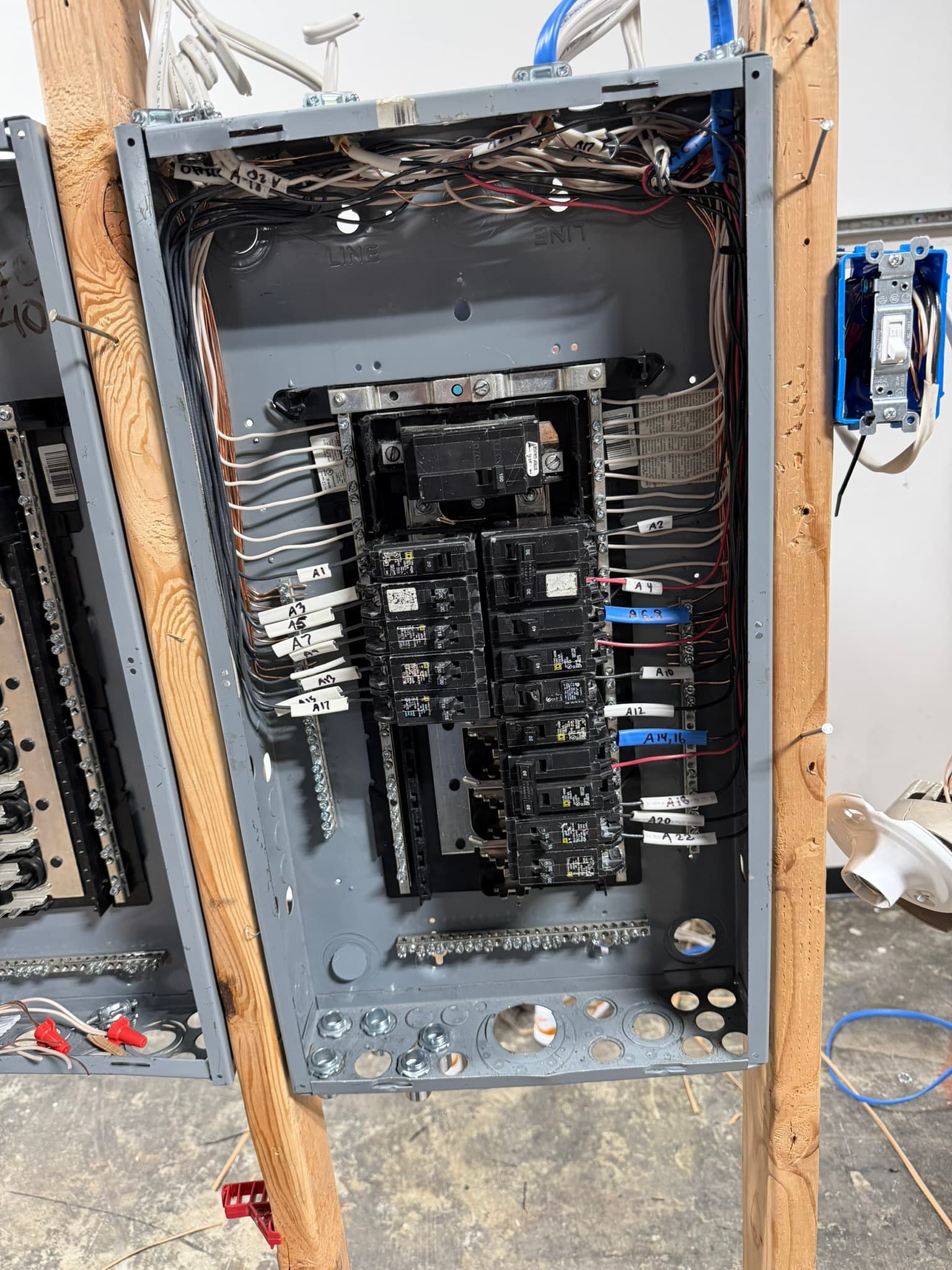
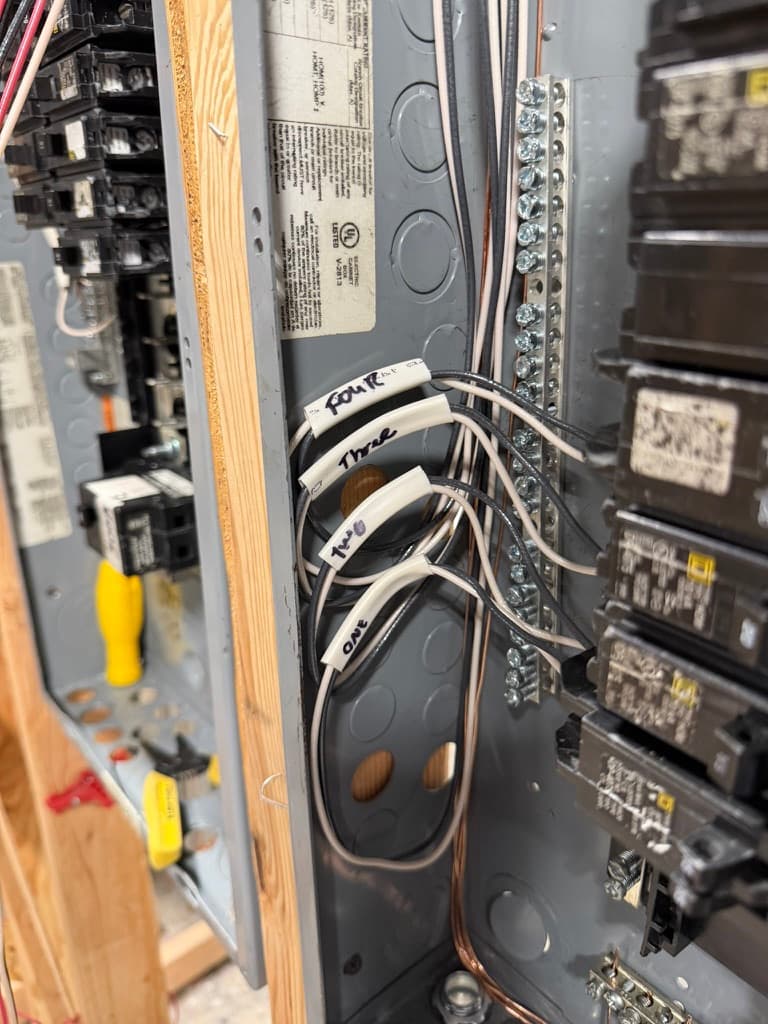
Trying out adding service loops to the circuits and labelling
With the new instructions, I tried out a few more things. I had originally thought that our teacher wanted the labels up near the top of the panel where the wires come in. Turns out, it was more about where they come in to the breaker. Also, I had gotten used to labelling them with where the branch circuit was going (bedroom, kitchen, etc.), but he just wanted them to match the circuit number on the panel schedule (A1, A3, etc.). I cleaned up that first one the best I could, but didn't take a picture. The other picture is my attempt to leave some extra for "service loops."
My bending and landing wires could definitely use more practice. It's clear it'll take some time and practice, but I'm happy with how far I've come in such a short time. I also really like the overlap from my previous career: making things easier for the next guy. It may not be obvious to some, but there's a lot of overlap with problem solving and critical thinking in both programming and electrical work. I know there's much more to learn, and I'm excited to see what that is when I finally get an apprenticeship.